
When people hear the word legacy, they often think about wealth, property, or a family business.
But to me, a legacy is much more than something we inherit.
It is also a responsibility.
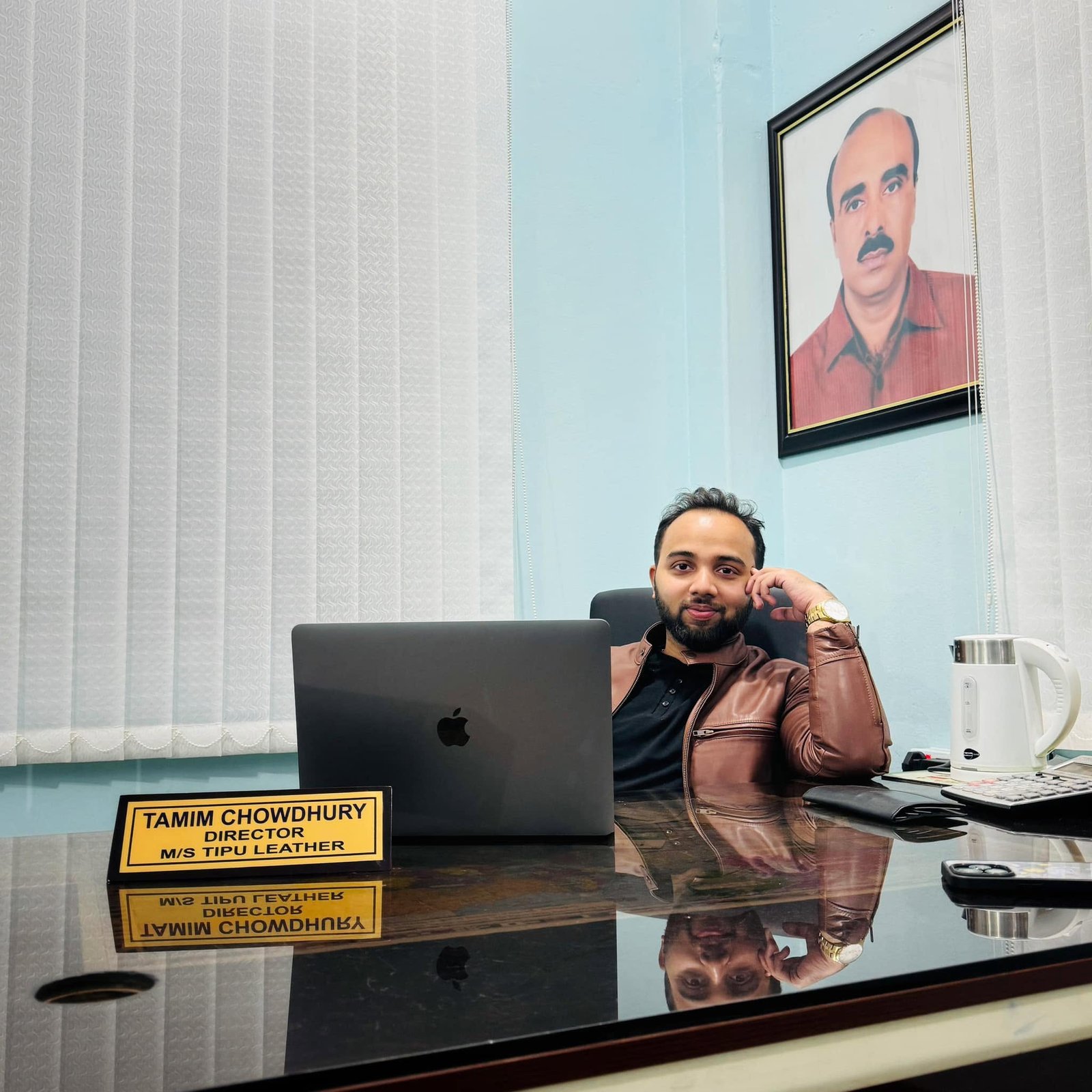
I understand this personally because I grew up around a family business that started long before I became responsible for it. My father started our leather business in 1983. I grew up seeing the business not only as a source of income, but as something connected to our family identity, hard work, and reputation.
After my father passed away, that meaning became even deeper.
Years later, when I took full responsibility for the business, I understood something clearly: I was not simply taking over a company. I was taking responsibility for something my father had spent years building.
Inheriting a Business Is Different From Building Trust
A business name can be inherited.
Trust cannot.
My father spent years building relationships with customers, workers, suppliers, and people connected to the business. When I took responsibility, I received the benefit of that history, but I also received the pressure of protecting it.
That is one of the biggest lessons I have learned about legacy.
The previous generation may create the foundation, but the next generation still has to prove itself.
People will eventually judge you by your own decisions.
I Could Not Simply Copy the Past
When my father was running the business, the market was very different.
There was no social media marketing like today. Customers behaved differently. Technology was different. Competition was different.
So I realized that respecting what my father built did not mean doing everything exactly the same way.
I needed to modernize the business.
I started focusing more on product quality, branding, digital marketing, business systems, new machinery, sourcing, and exploring international markets.
At the same time, I wanted to keep the basic values that helped the business survive for decades.
This taught me an important lesson: protecting a legacy sometimes requires change.
There Is Pressure Behind a Family Business
From the outside, inheriting a family business may look like an advantage.
And it is an advantage in many ways.
You receive experience, relationships, a name, and a foundation that someone else worked hard to create.
But there is another side.
When many employees depend on the business, your decisions affect their families too. When customers have trusted your company for years, one wrong decision can damage a reputation that took decades to build.
There are also difficult periods.
Sales can fall. Payments can be delayed. Markets can become uncertain. Costs can increase.
During those moments, you understand that running a legacy business is not just about enjoying what the previous generation created.
Sometimes it means fighting to protect it.
My Goal Is Not Only to Preserve What I Received
I do not want my contribution to the family business to be simply, “I kept it running.”
I want to add something to it.
I want to improve the quality, strengthen the brand, introduce better technology, explore new markets, and make the company stronger than the version I inherited.
Because I believe every generation should add another chapter to the story.
My father created the foundation.
My responsibility is to build on it.
And perhaps one day, someone after me will have the responsibility to take it even further.
What Legacy Means to Me
Legacy is not about living in the shadow of the previous generation.
It is about respecting their work while having the courage to create your own path.
The question is not only:
“What did my father leave for me?”
The more important question is:
“What will I add to what he left behind?”
That, to me, is the real responsibility behind a legacy.